
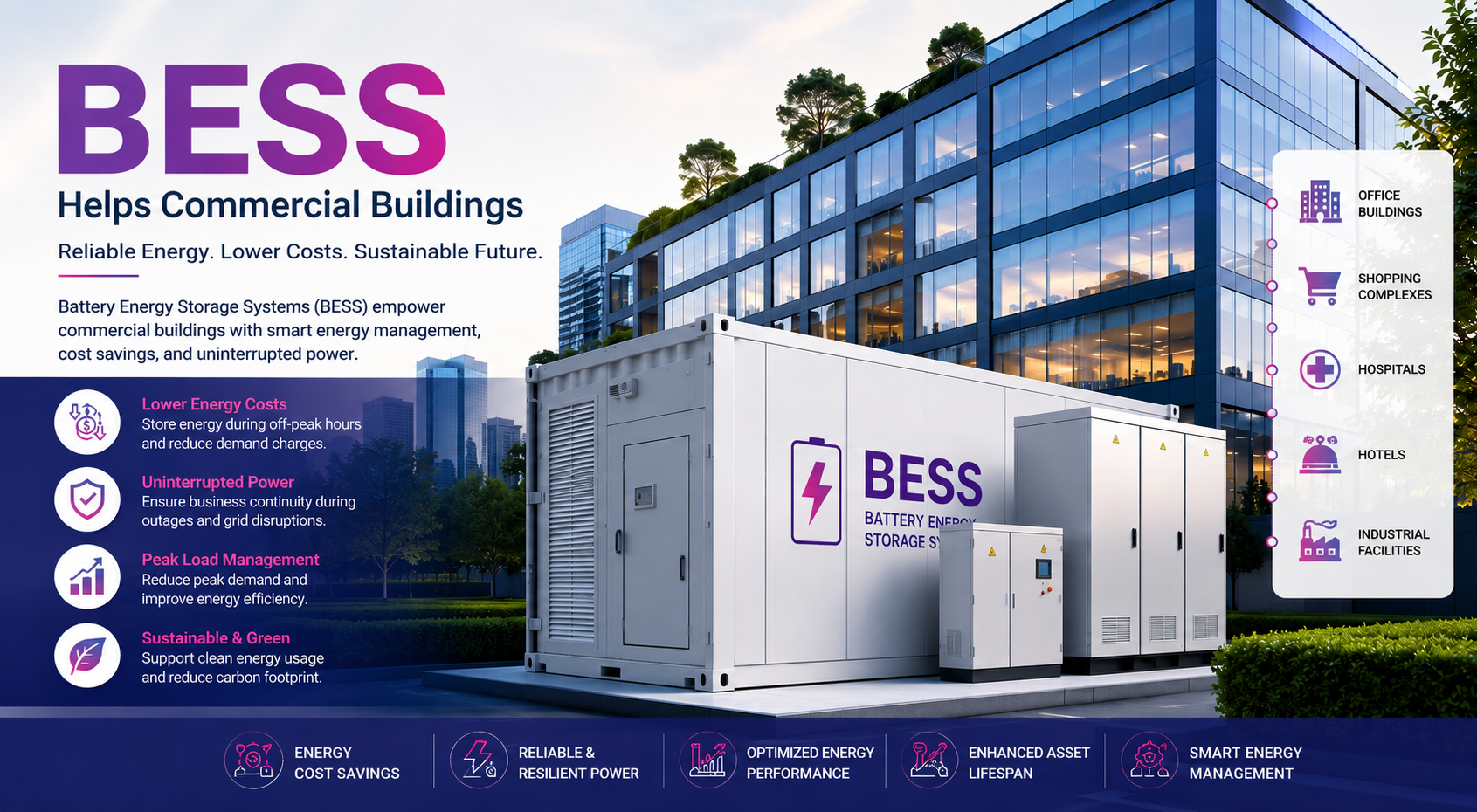
Electricity bills for commercial buildings include energy charges and demand charges. A Battery Energy Storage System (BESS) helps reduce peak demand by storing electricity and using it during high-demand periods. This article explains what is BESS India, BESS meaning, how BESS works, and why battery energy storage system India solutions help businesses lower costs.
BESS stands for Battery Energy Storage System. It stores electricity from the grid or renewable sources and supplies it when required, improving efficiency and reliability.
Demand charges are based on the highest level of electricity demand recorded during a billing cycle. Even brief spikes can increase monthly bills.
BESS charges during low-demand periods and discharges during peak demand. This peak-shaving strategy reduces maximum grid demand and lowers demand charges.
Lower electricity bills, improved power reliability, solar integration, backup power, reduced diesel dependence, lower emissions, and better energy management.
Commercial offices, malls, hospitals, hotels, schools, IT parks, warehouses, and industrial facilities.
Growing energy costs, sustainability goals, and renewable energy adoption are driving demand for battery energy storage system India solutions.
Enectron provides advanced BESS solutions that help organizations optimize energy usage, improve resilience, and reduce operating costs.
Understanding what is BESS India and how BESS works helps businesses make informed energy decisions. BESS is a future-ready investment for reducing demand charges while supporting reliable and sustainable operations.

